
Objects of the Revolution
Objects of the Revolution
The Connecticut Department of Transportation commissioned this series of signs to commemorate the 250th anniversary of the American Revolution and the founding of the State of Connecticut.
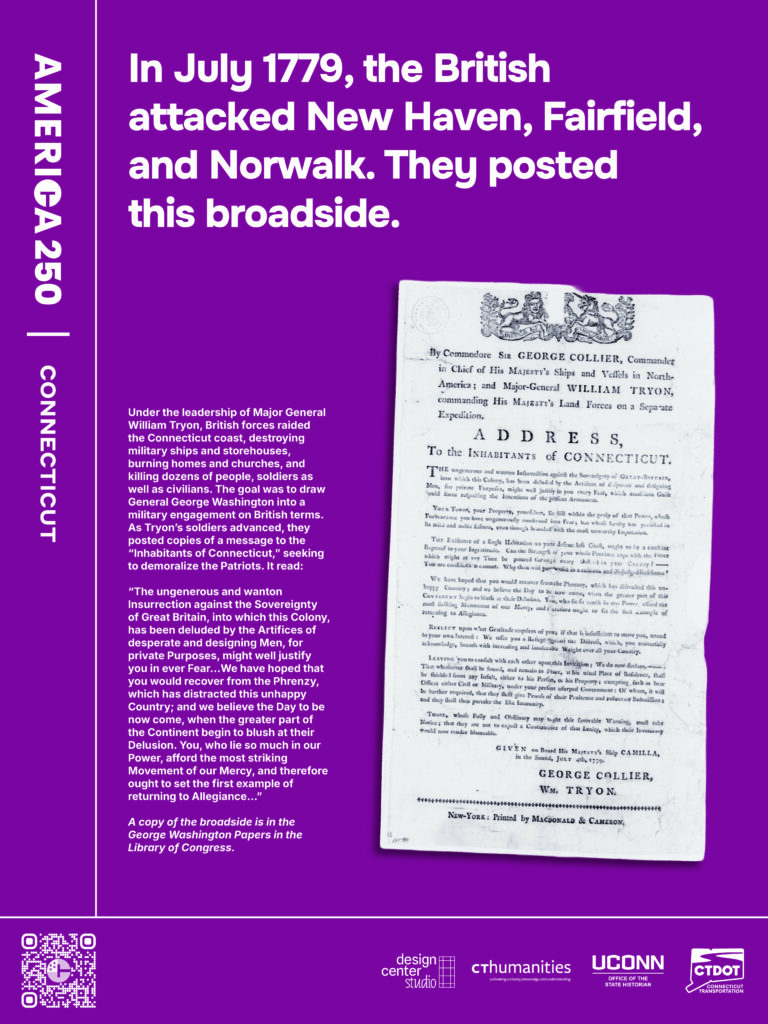
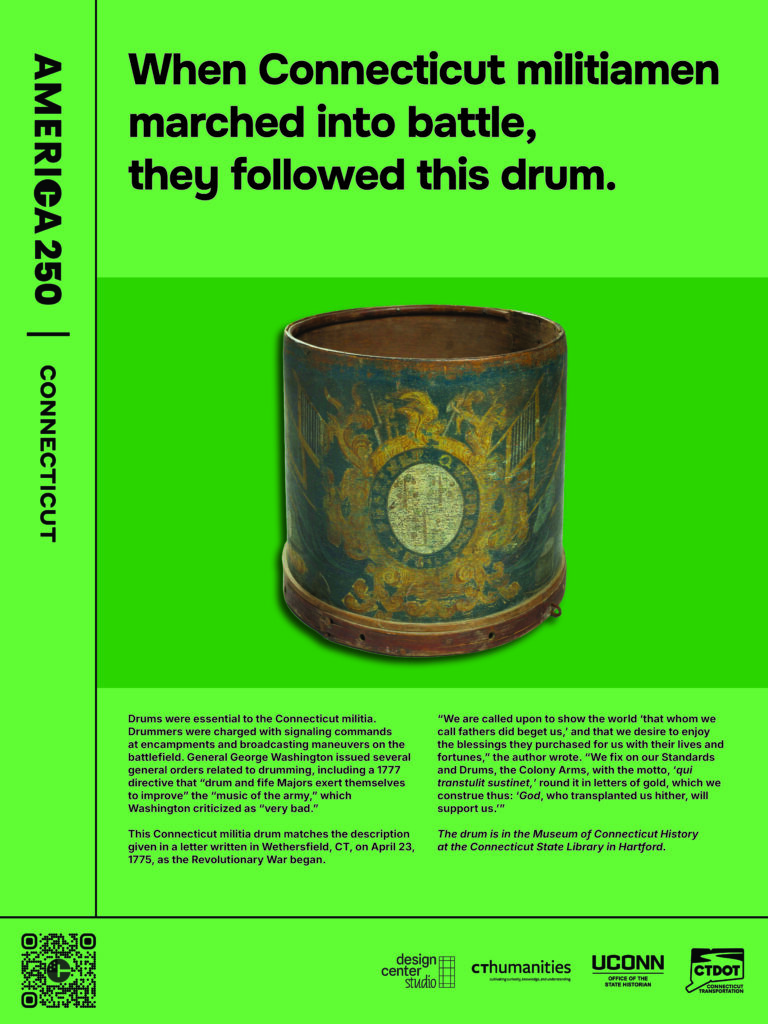
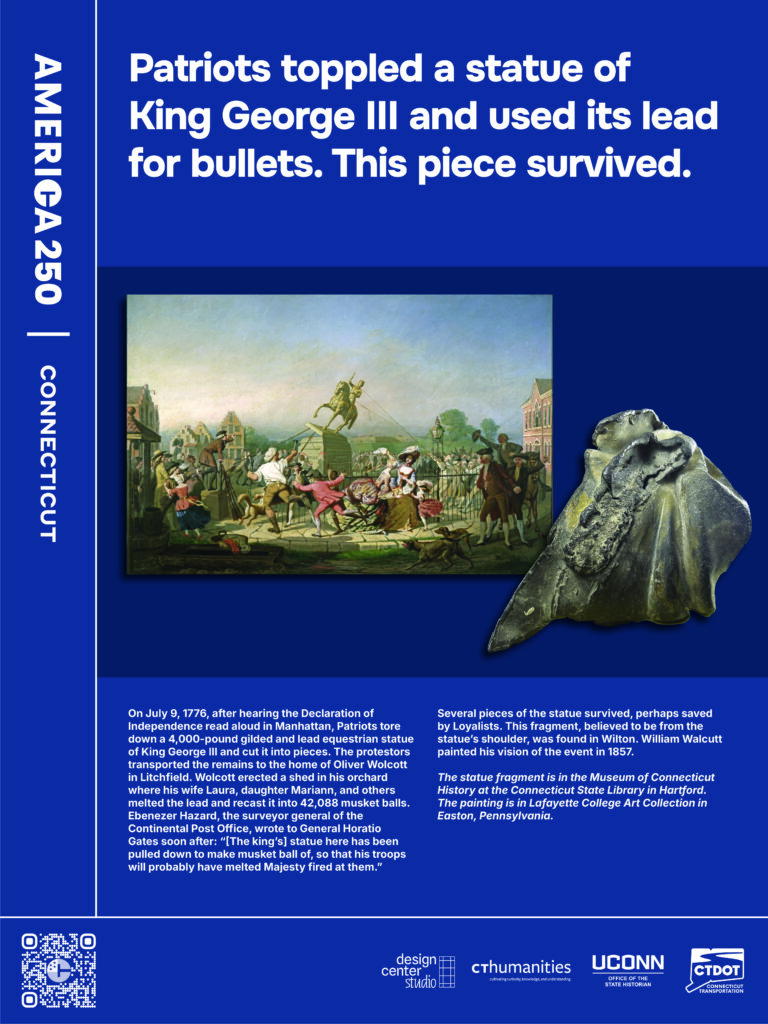
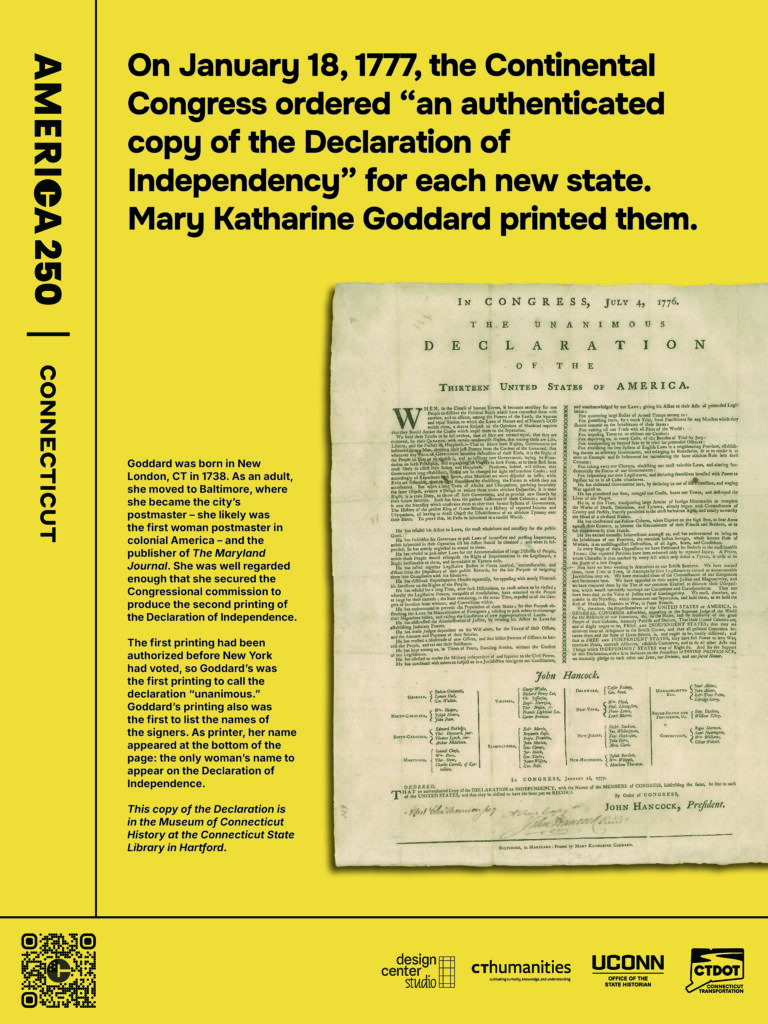
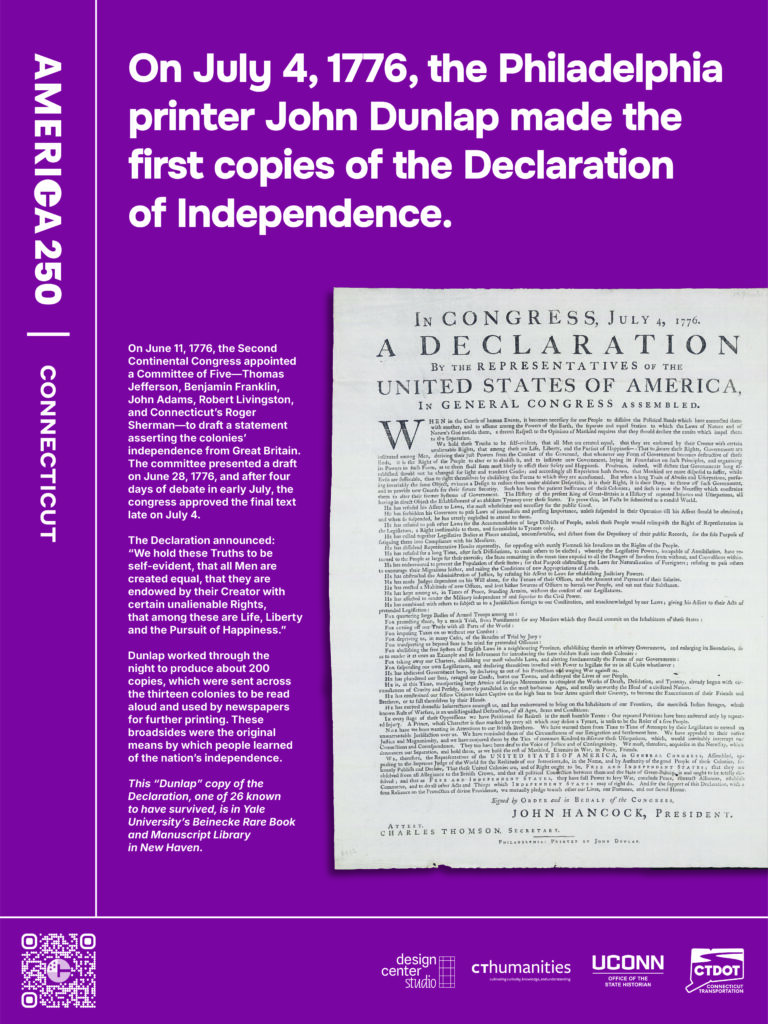
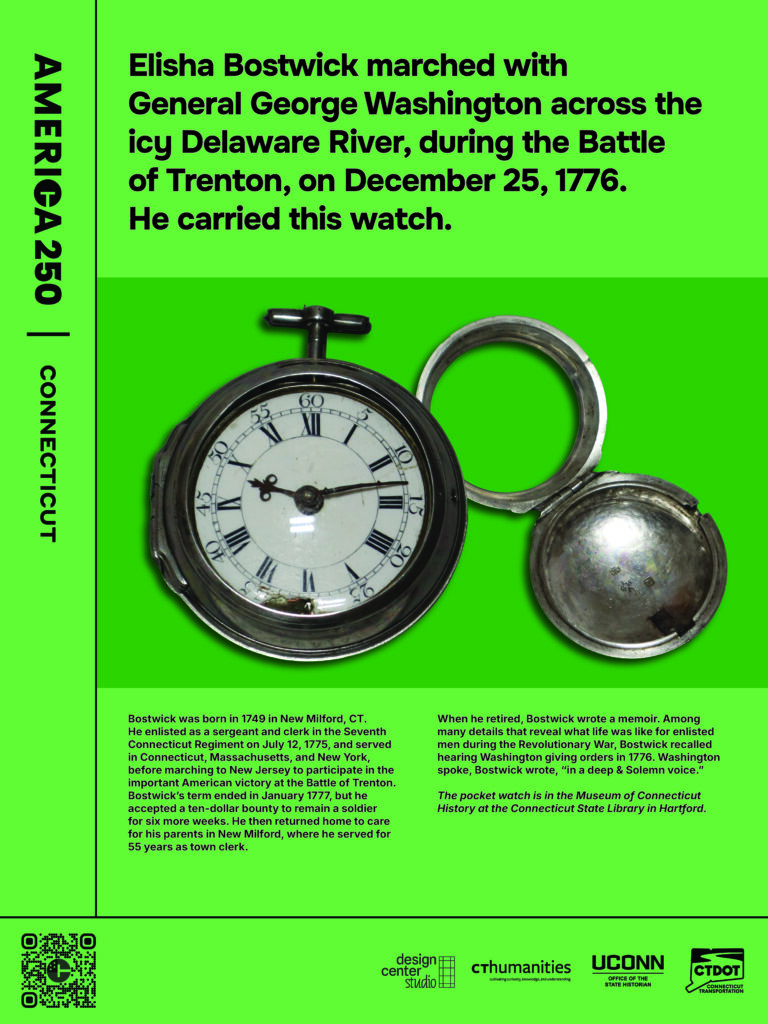
Each sign highlights a unique Connecticut story from the Revolutionary era, told through a historic Connecticut object. A canteen recalls a soldier’s service, while a homespun rug recalls domestic labor; a political pamphlet argues for independence, while a British broadside warns of treason; a battlefield sketch shows the war, while a veteran’s emancipation contract makes freedom real. These signs and dozens more — which will be installed at Department of Transportation sites across the state — reflect how Connecticans of all stripes helped to give the American Revolution its shape.
The featured objects come primarily from museums, archives, and historical societies in Connecticut; the series also includes compelling Connecticut artifacts from special collections across the United States. The signs were produced by Connecticut State Historian Andy Horowitz on behalf of the Connecticut Semiquincentennial Commission. Printed in the colors of the Connecticut flag, the signs were designed by students working in the Design Center Studio at the University of Connecticut.
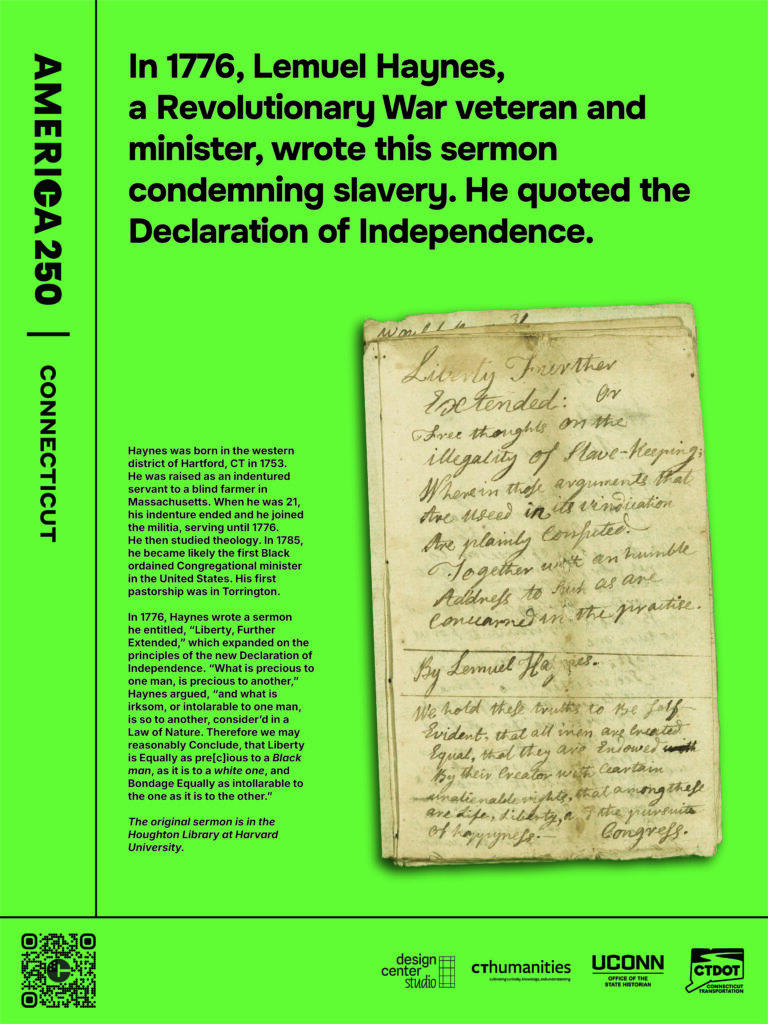
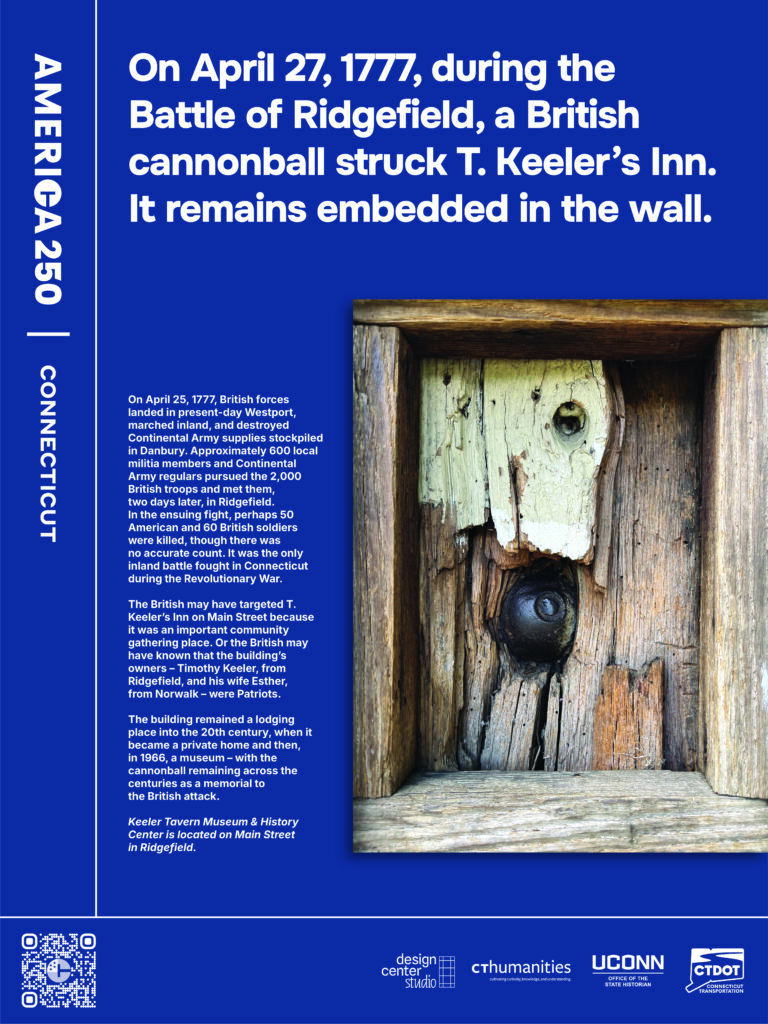
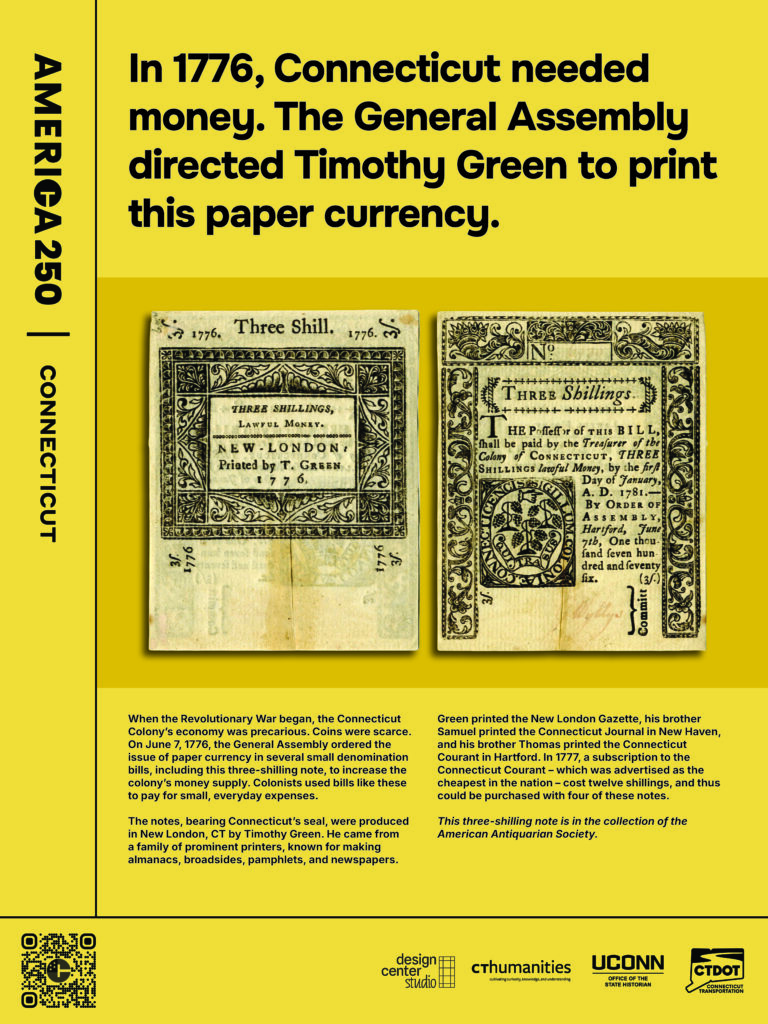
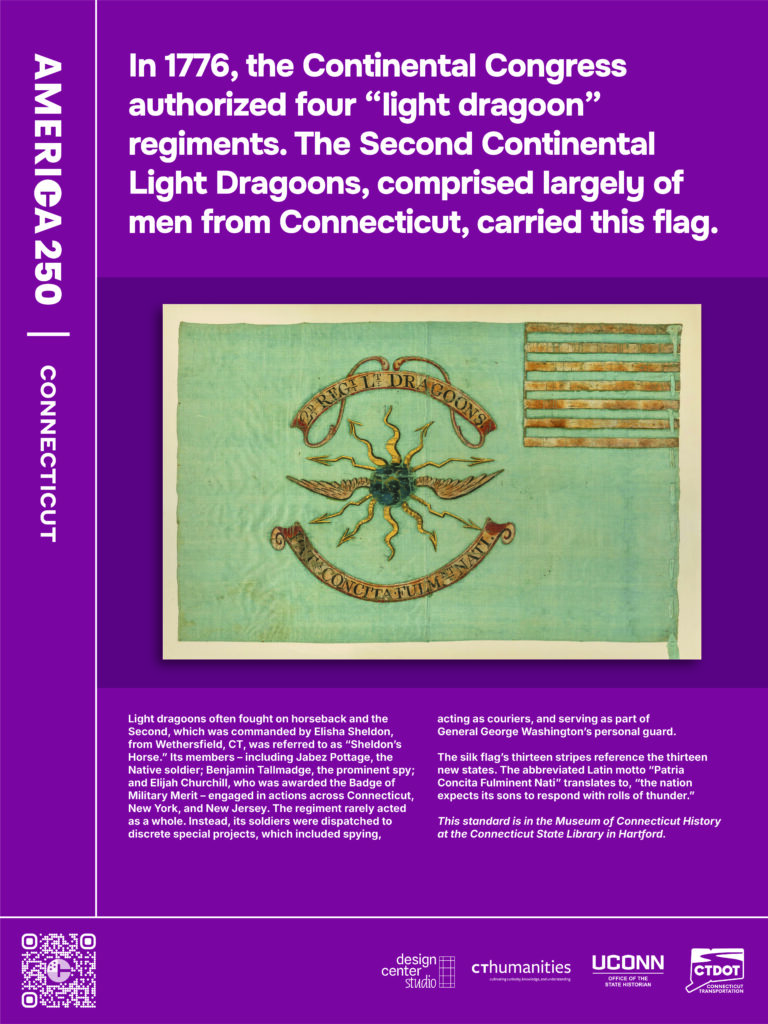
Credits
We are grateful to the museums, libraries, and archives that shared their collections for this project, and encourage you to visit them in person.
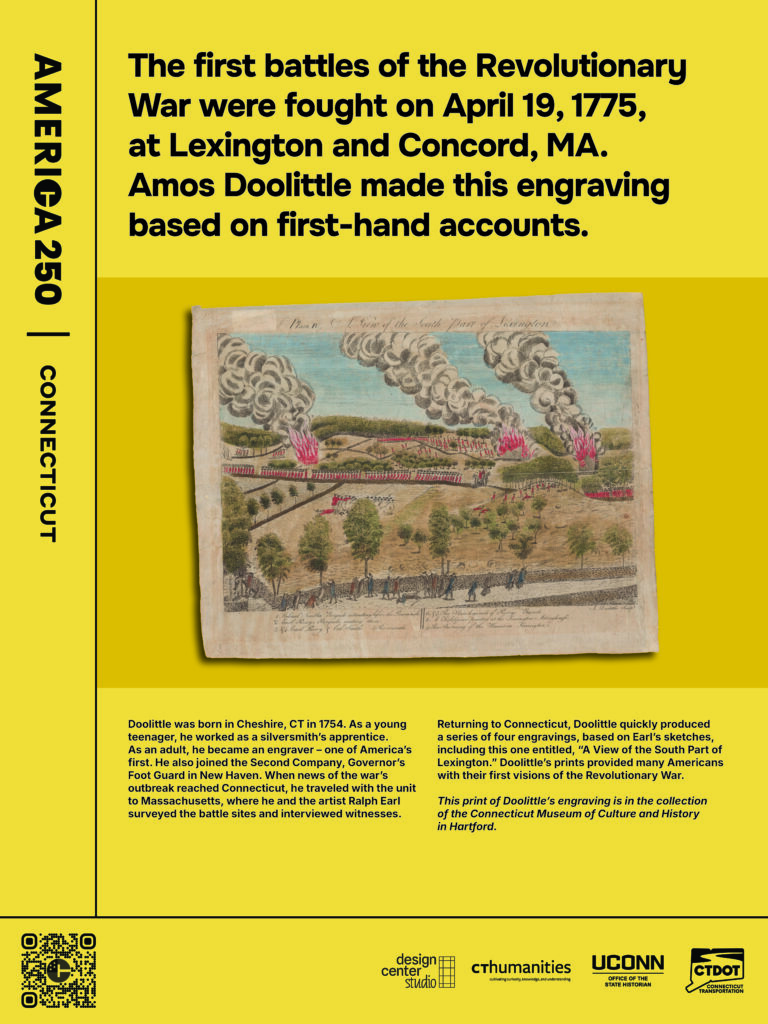
Amos Doolittle’s engraving is in the Connecticut Museum of Culture and History in Hartford.
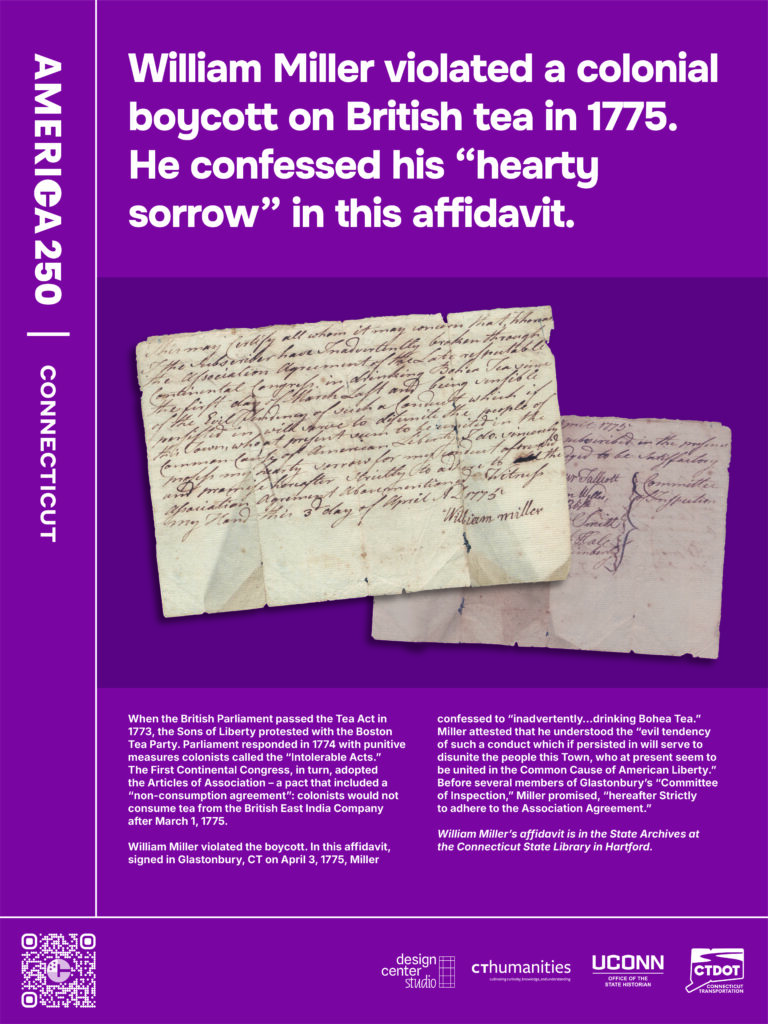
William Miller’s affidavit is in the Connecticut State Archives in Hartford.
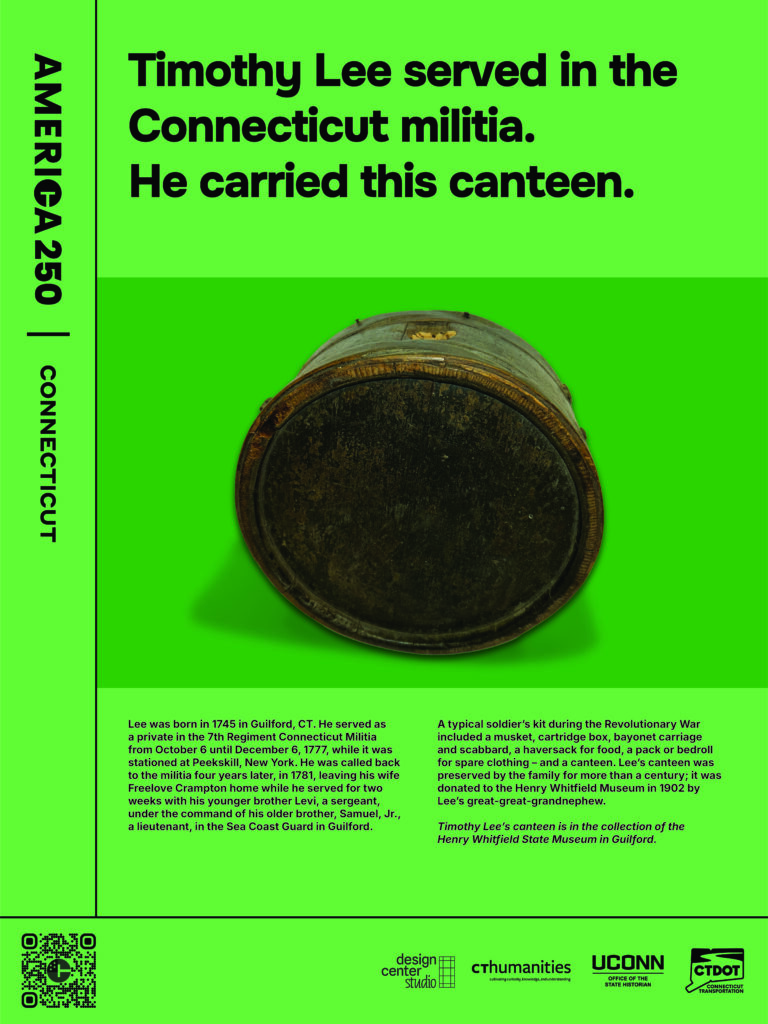
Timothy Lee’s canteen is in the Henry Whitfield State Museum in Guilford.
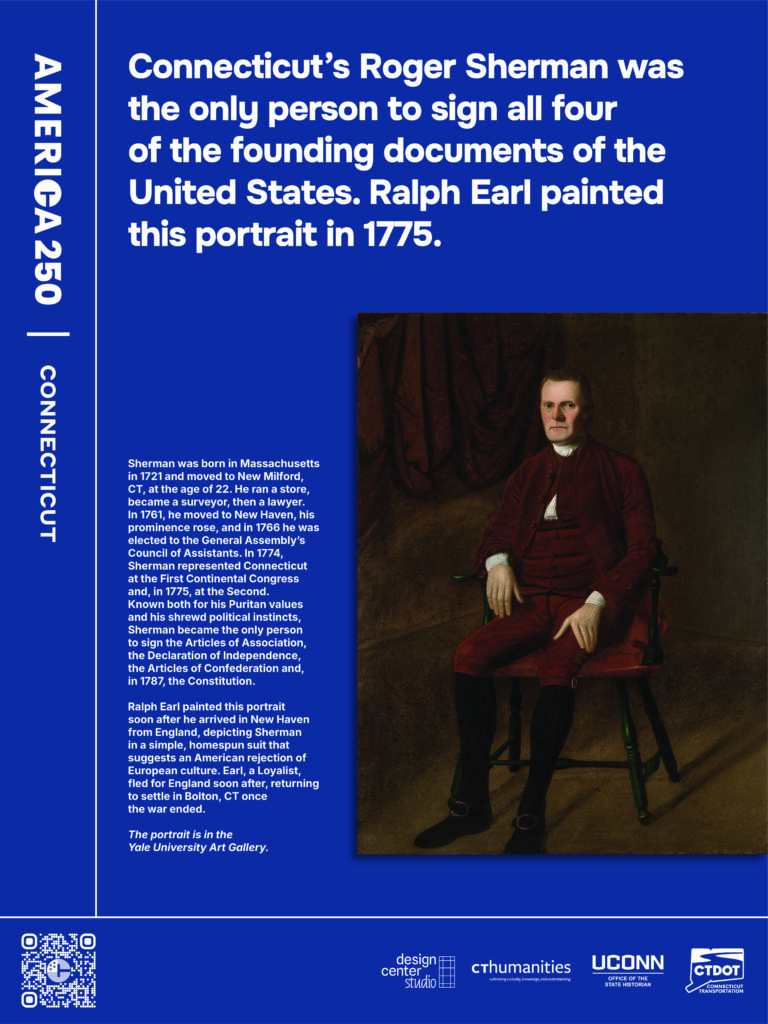
Roger Sherman’s portrait is in the Yale University Art Gallery in New Haven.
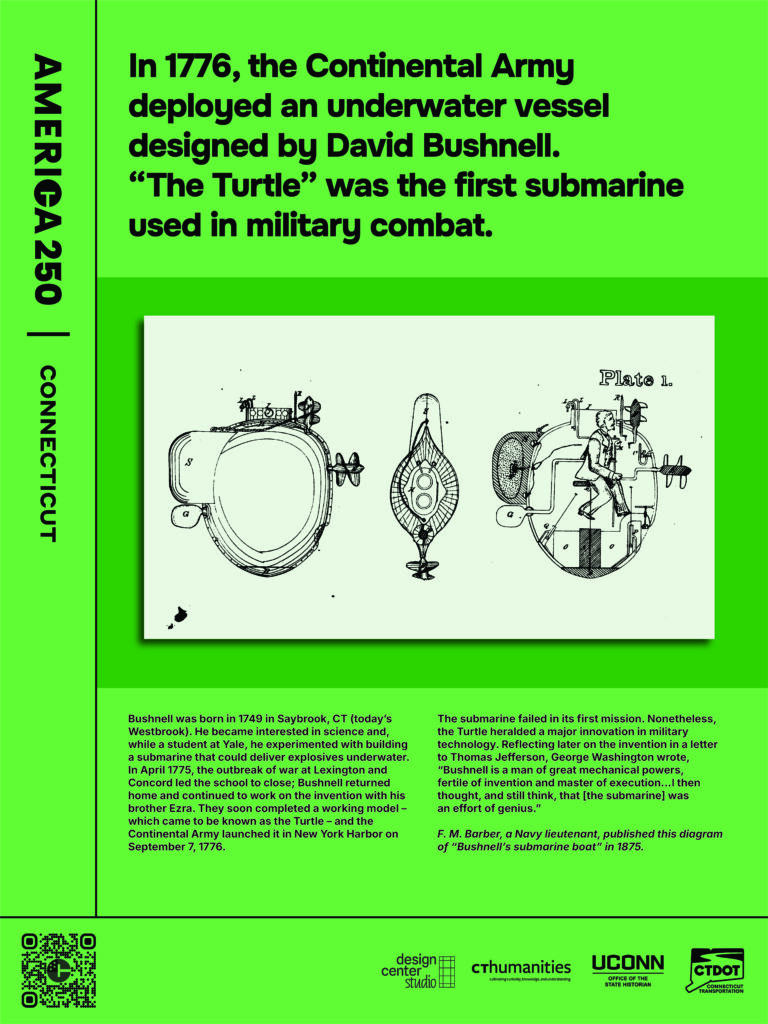
David Bushnell’s submarine diagram is in the Library of Congress in Washington, D.C.
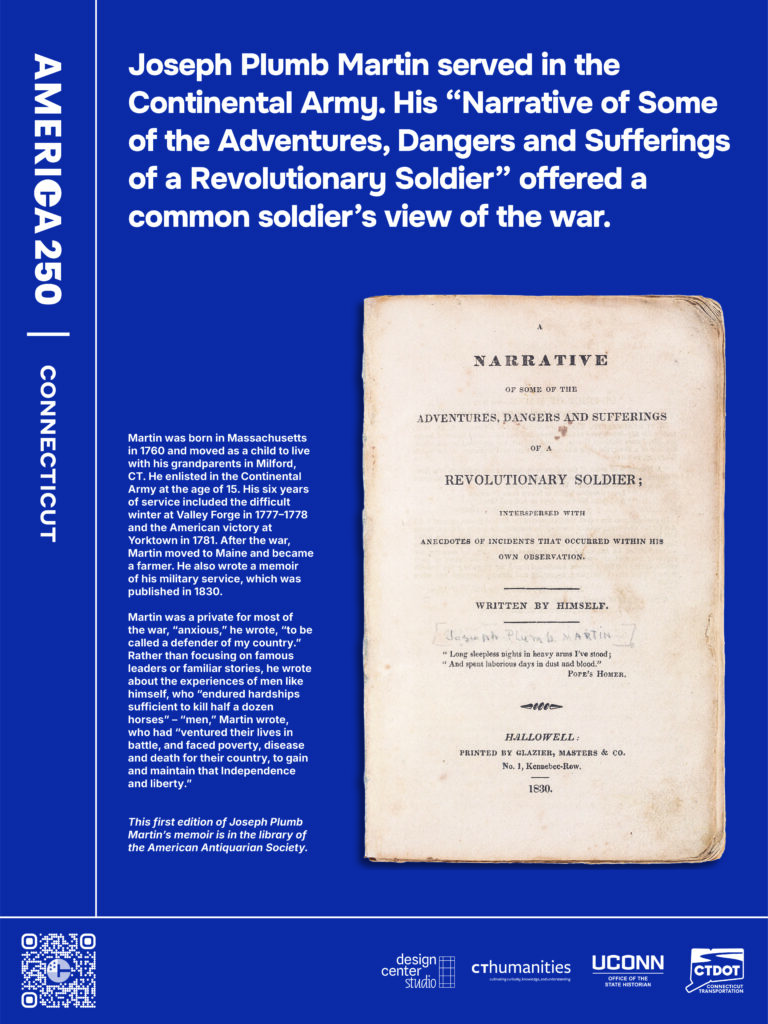
Joseph Plumb Martin’s memoir is in the American Antiquarian Society in Worcester, MA.
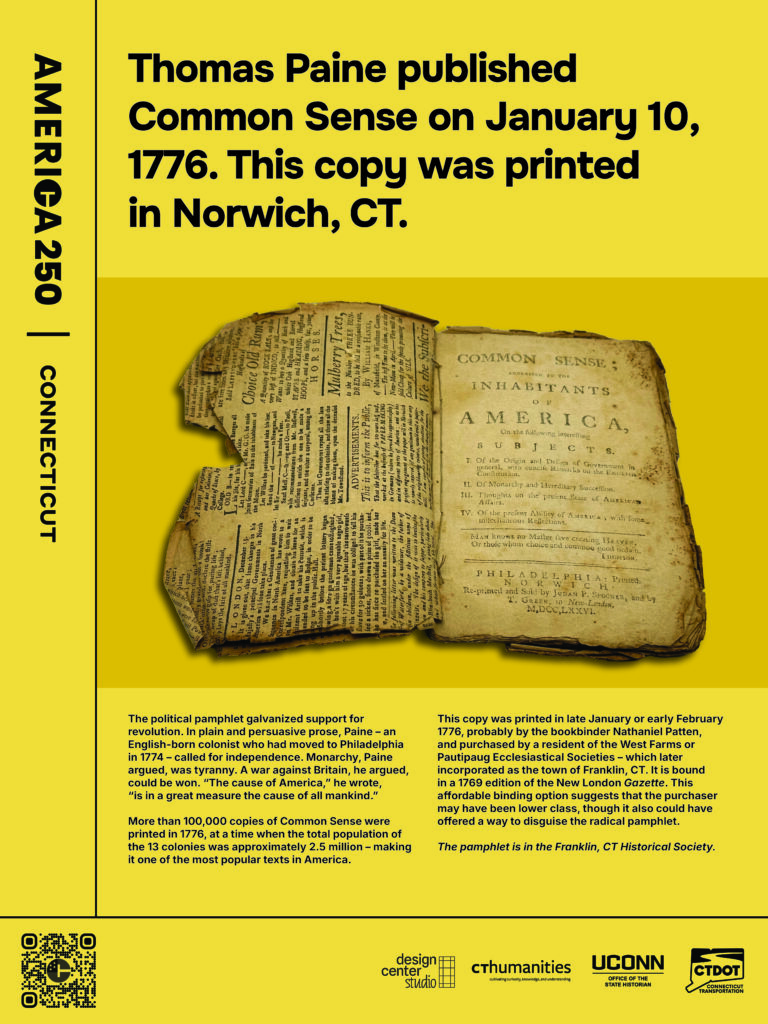
Thomas Paine’s Common Sense is in the Franklin Historical Society in Franklin.
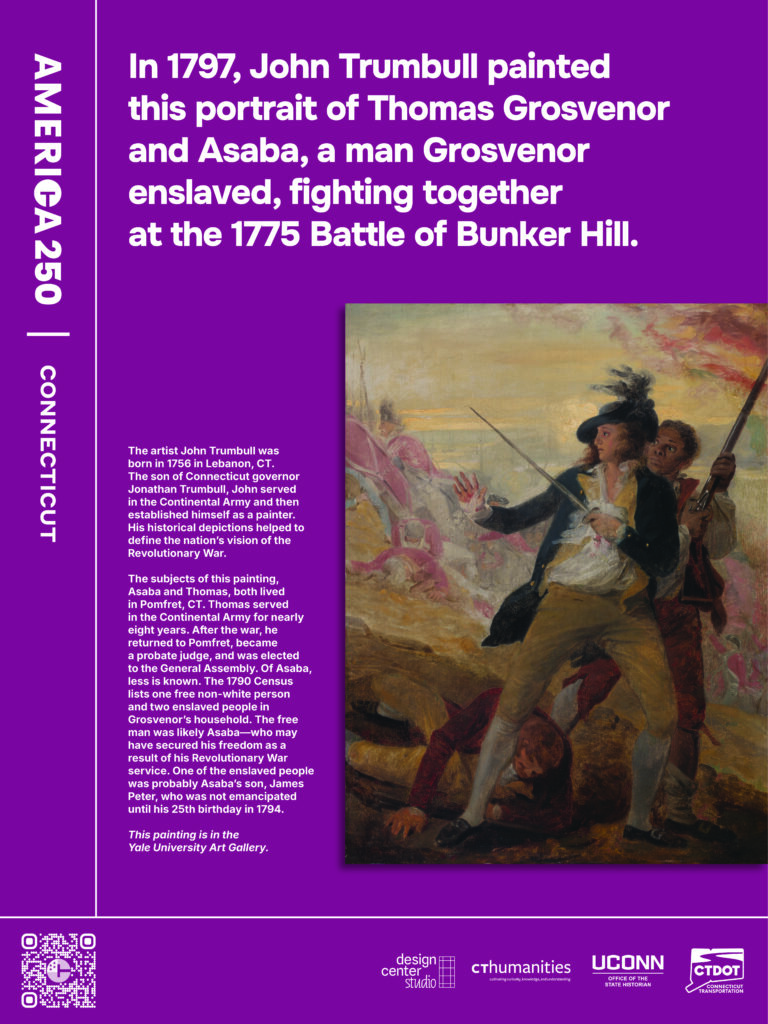
John Trumbull’s painting is in the Yale University Art Gallery in New Haven.
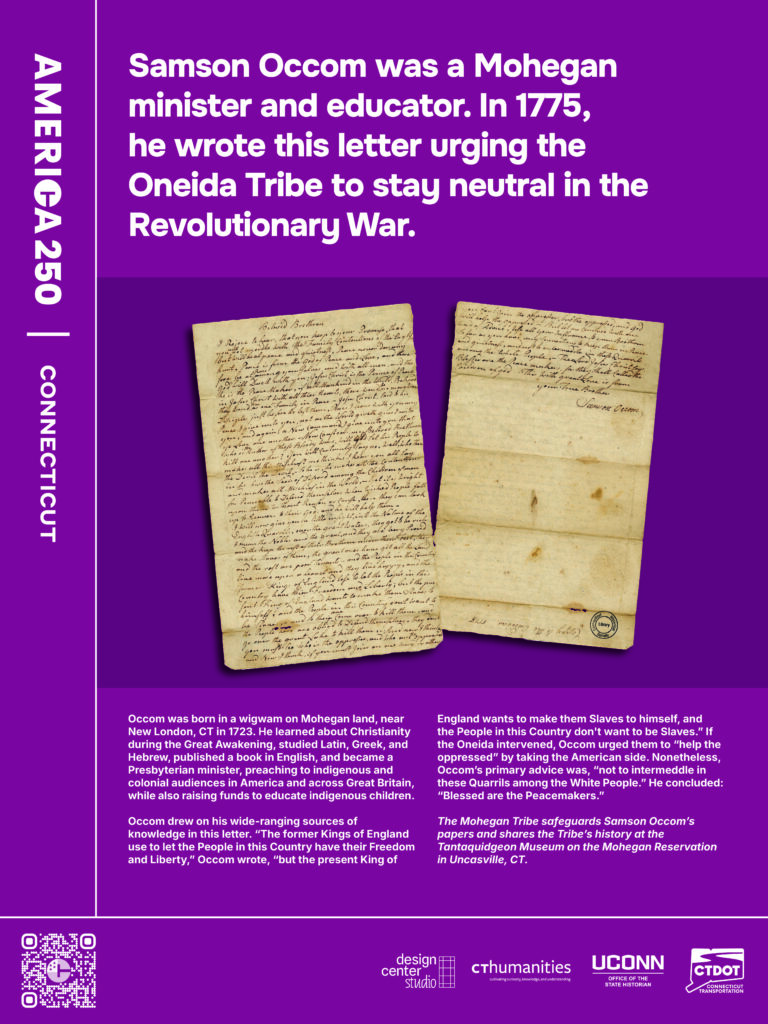
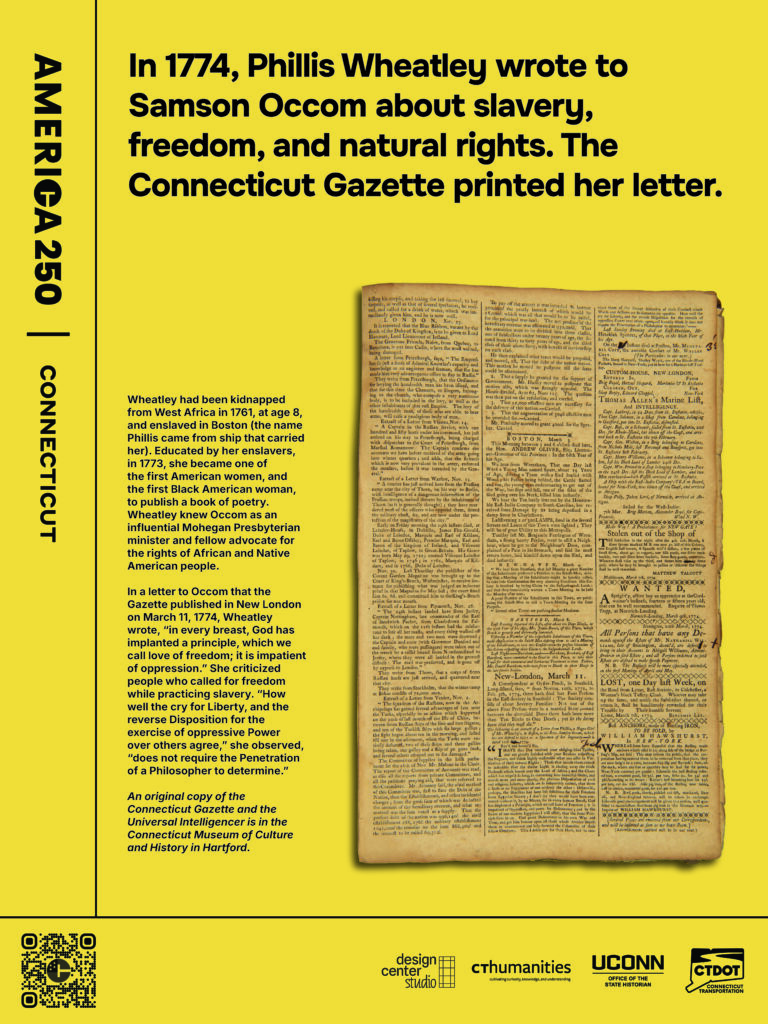
Samson Occom’s letter is in the Tantaquidgeon Museum on the Mohegan Reservation in Uncasville, CT.
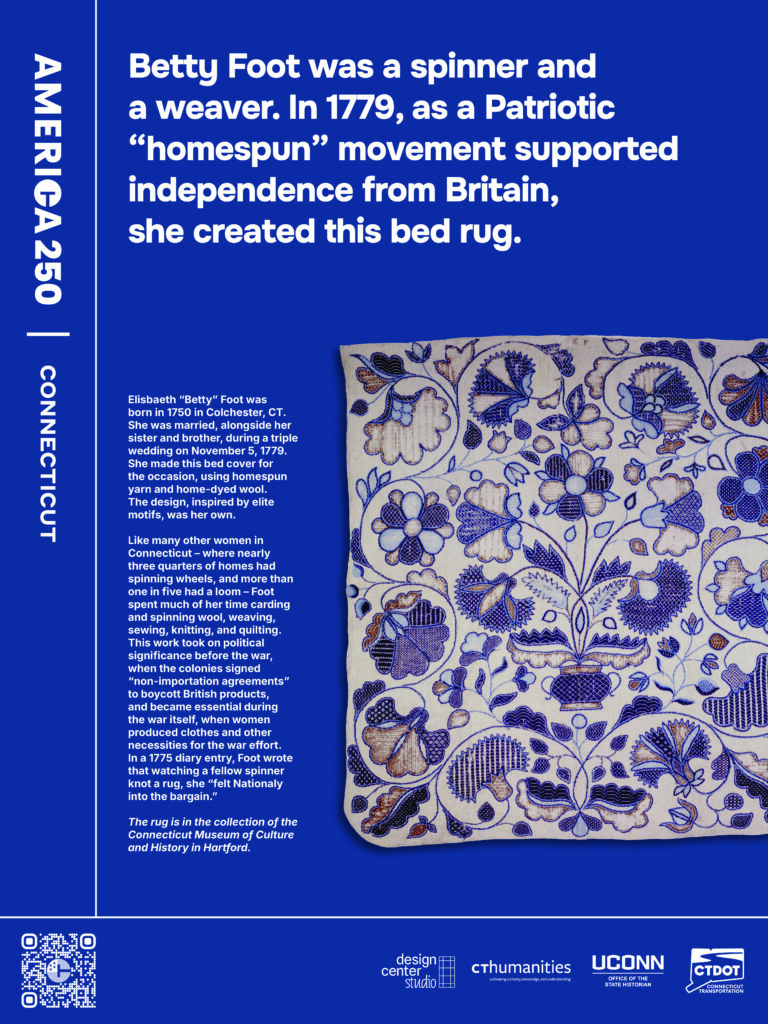
Elizabeth Foote’s bed rug is in the Connecticut Museum of Culture and History in Hartford.
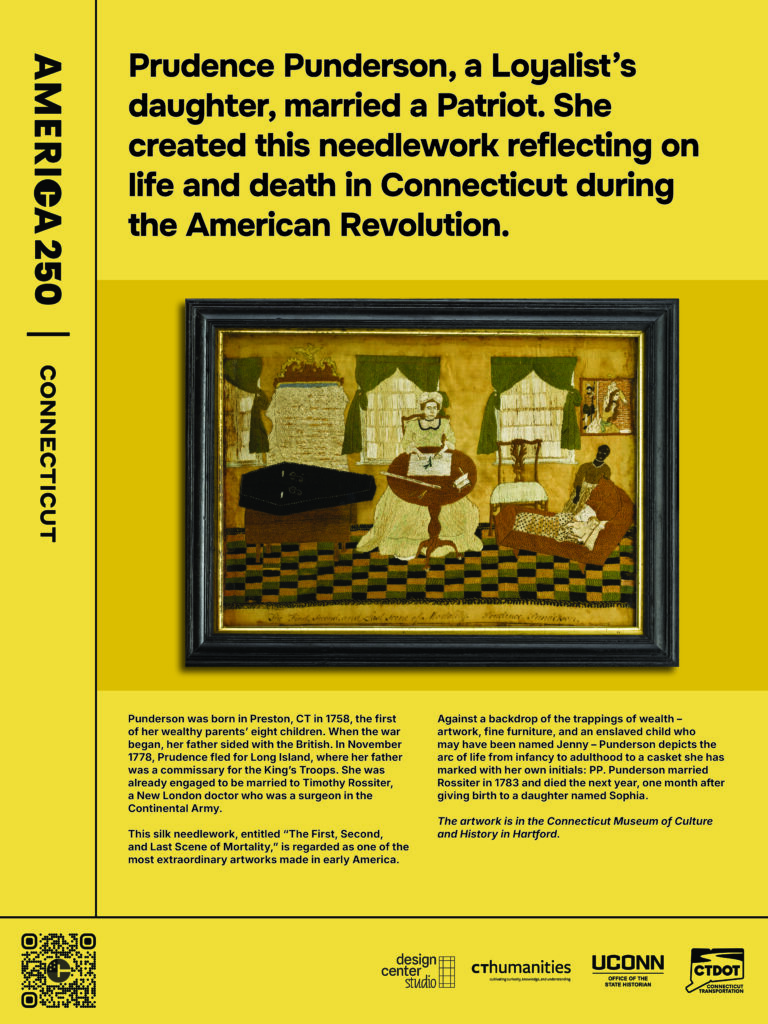
Prudence Punderson’s needlepoint is in the Connecticut Museum of Culture and History in Hartford.
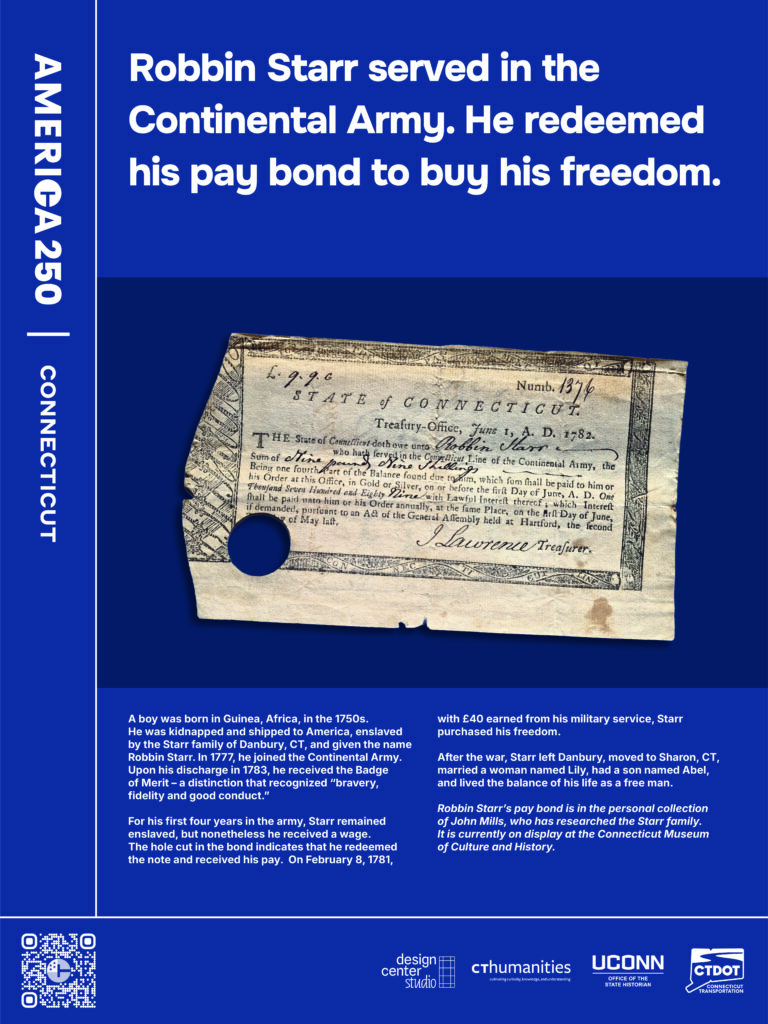
Robbin Starr’s pay stub is in the personal collection of John Mills, who has researched the Starr family. It is currently on display at the Connecticut Museum of Culture and History in Hartford.
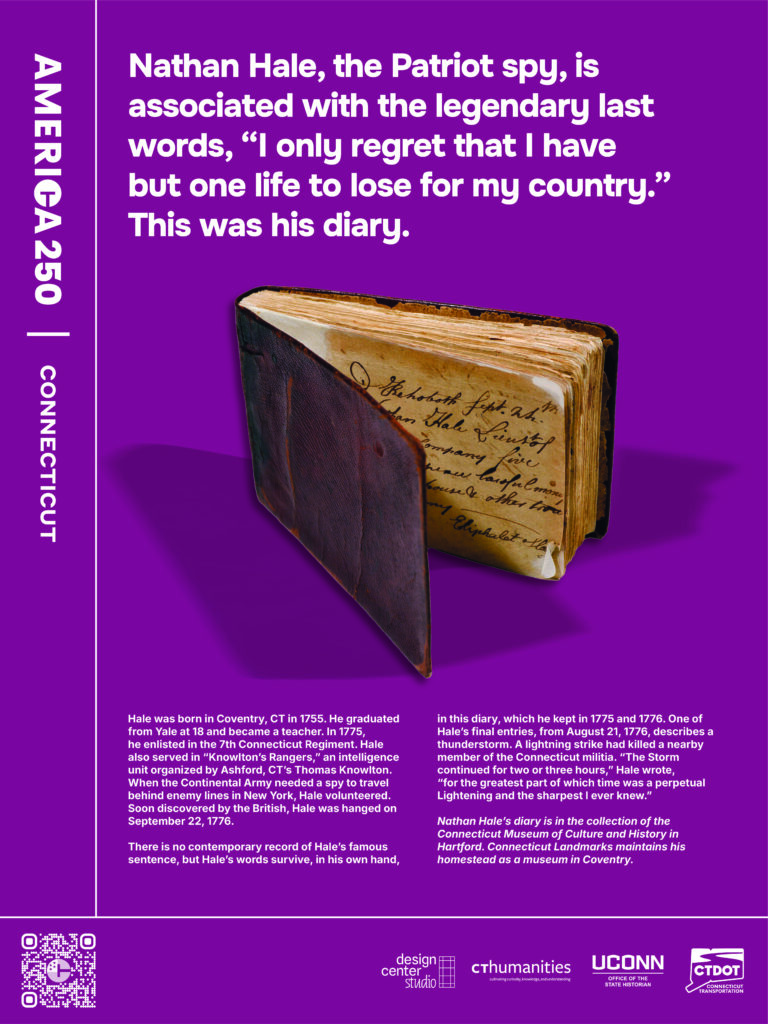
Nathan Hale’s diary is in the Connecticut Museum of Culture and History in Hartford.
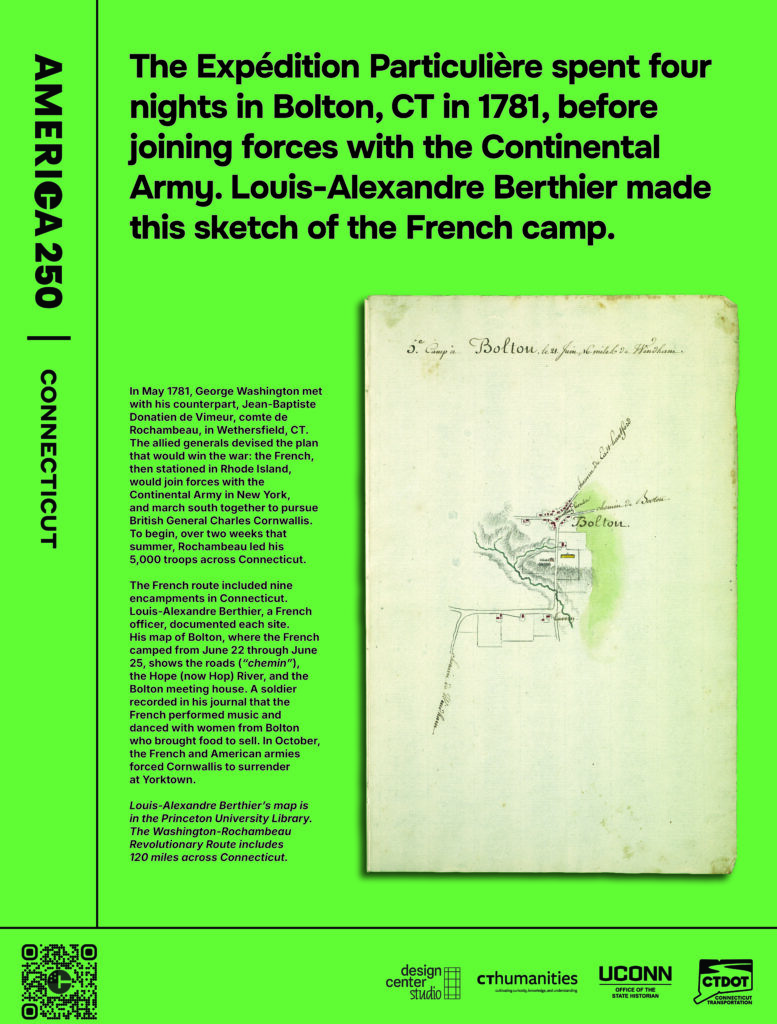
Rochambeau’s map of Bolton is in the Princeton University Library in Princeton, NJ.
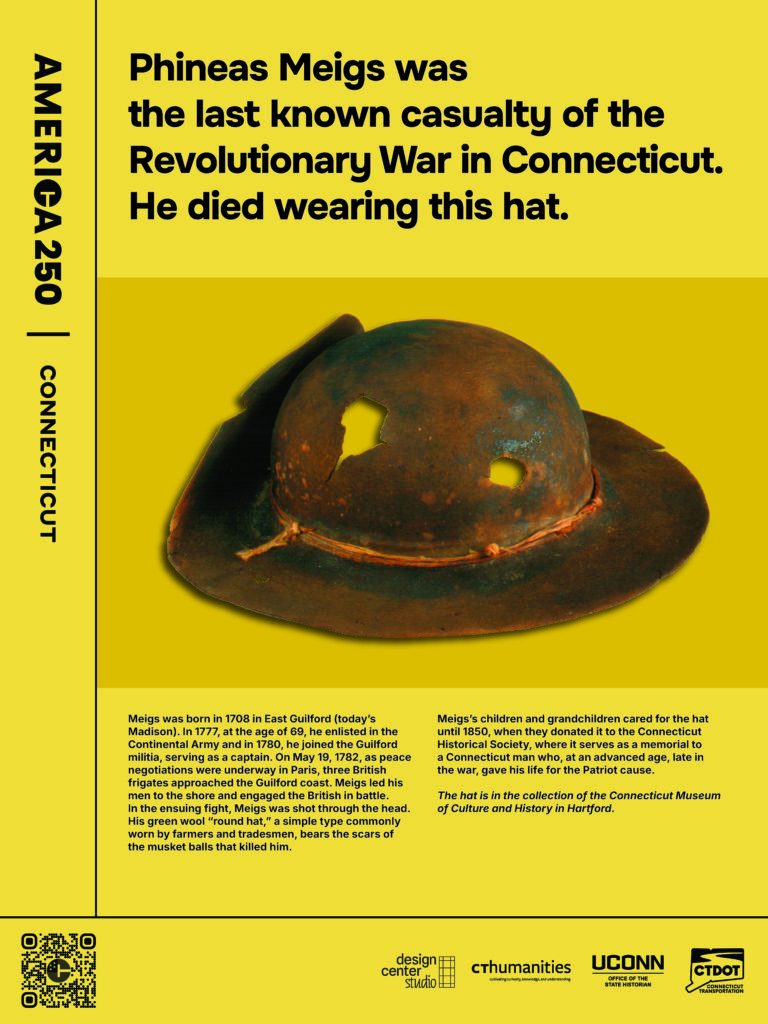
Phineas Meig’s hat is in the Connecticut Museum of Culture and History in Hartford.
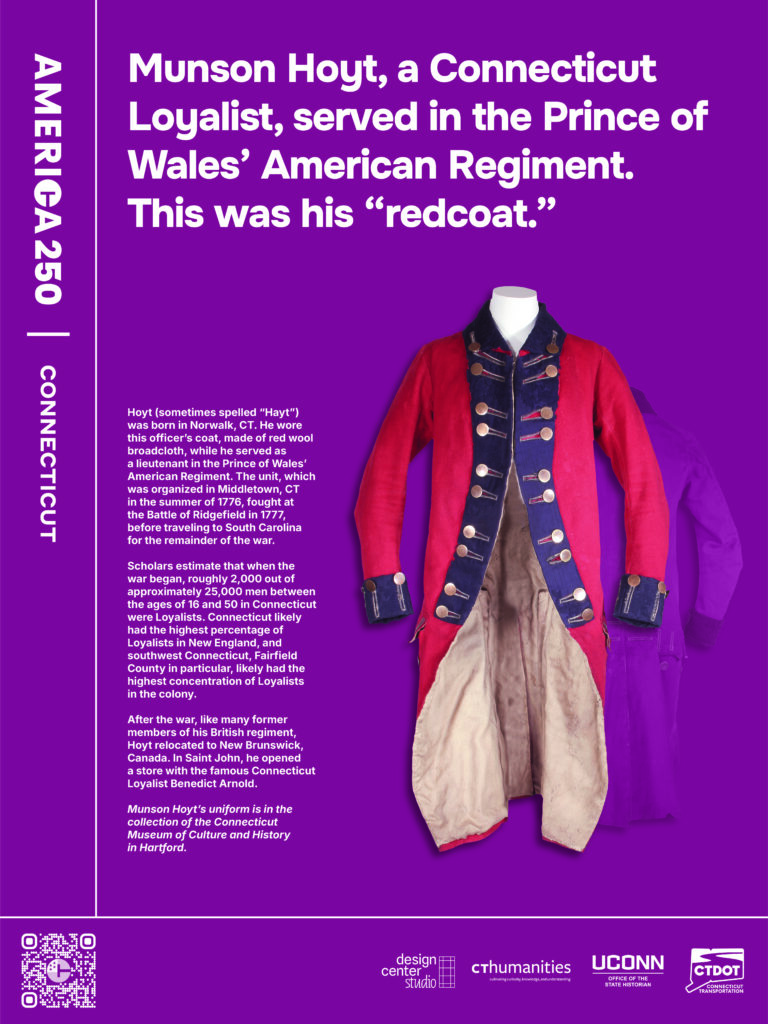
Munson Hoyt’s uniform is in the Connecticut Museum of Culture and History in Hartford.
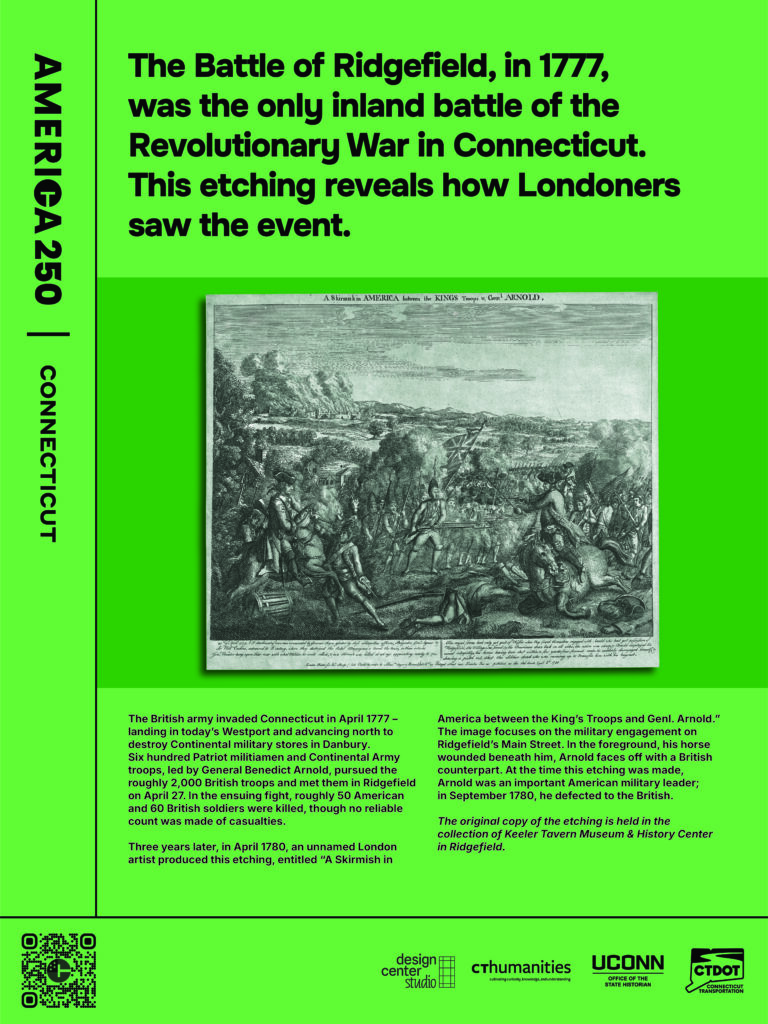
The etching of the Battle of Ridgefield is in Keeler Tavern Museum & History Center in Ridgefield.
Keeler Tavern’s cannonball is in Keeler Tavern Museum & History Center in Ridgefield.
Timothy Green’s Connecticut currency is in the American Antiquarian Society in Worcester, MA.
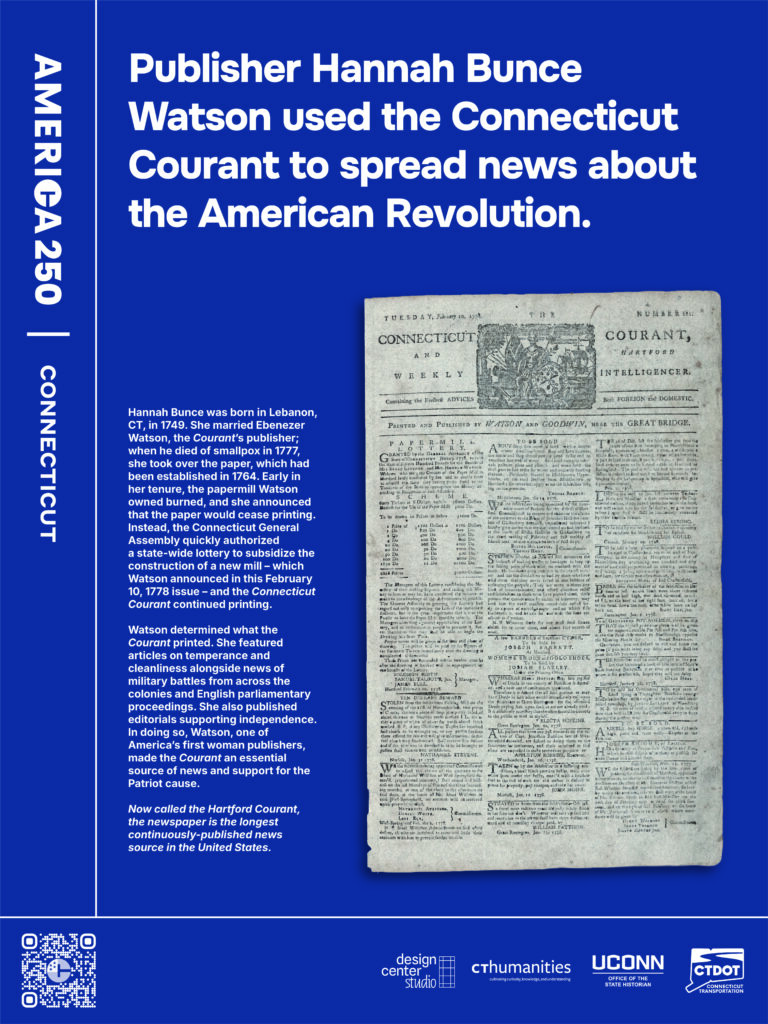
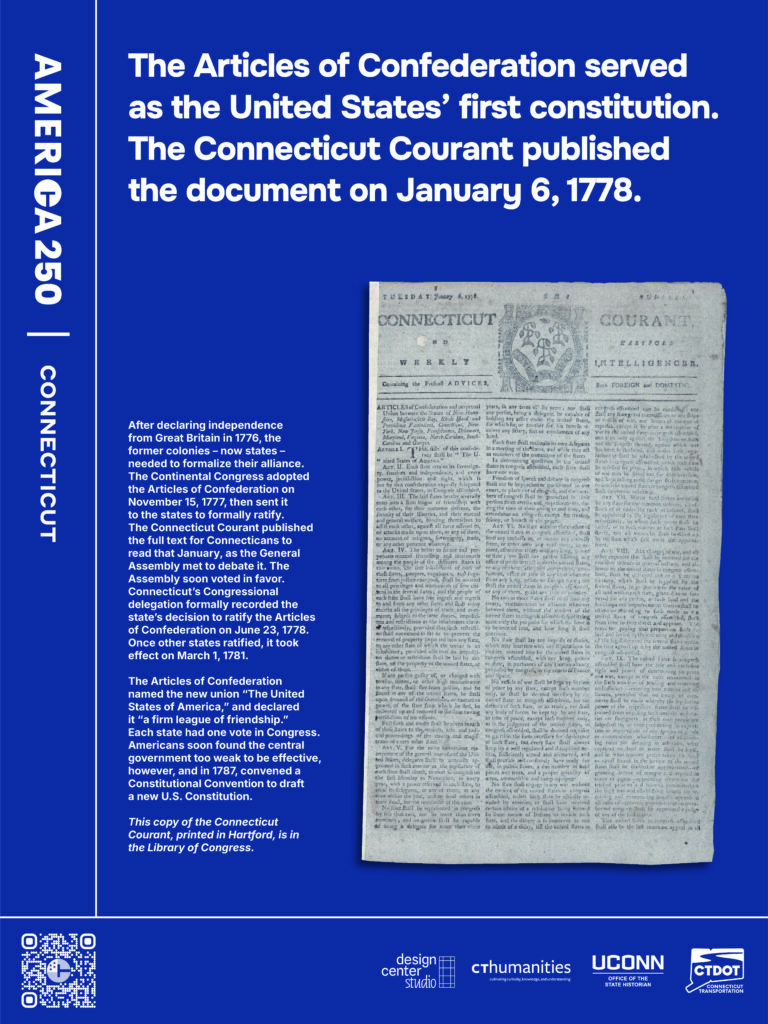
Hannah Bunce Watson’s Connecticut Courant is in the Library of Congress in Washington, D.C.
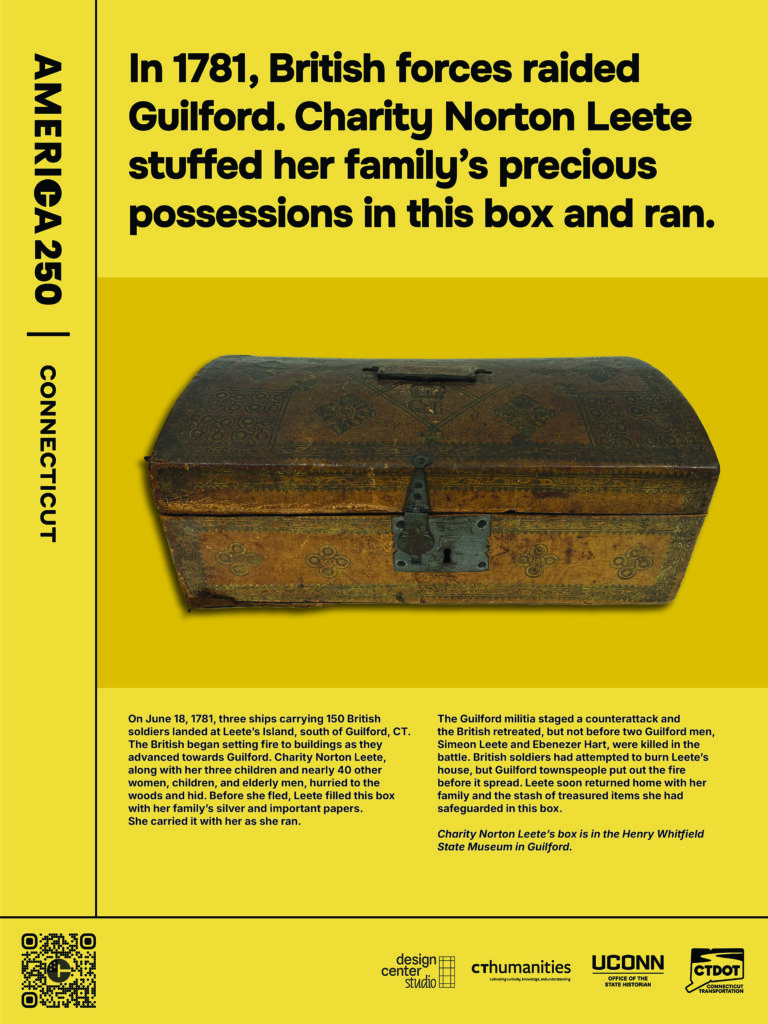
Charity Norton Leete’s document box is in the Henry Whitfield State Museum in Guilford.
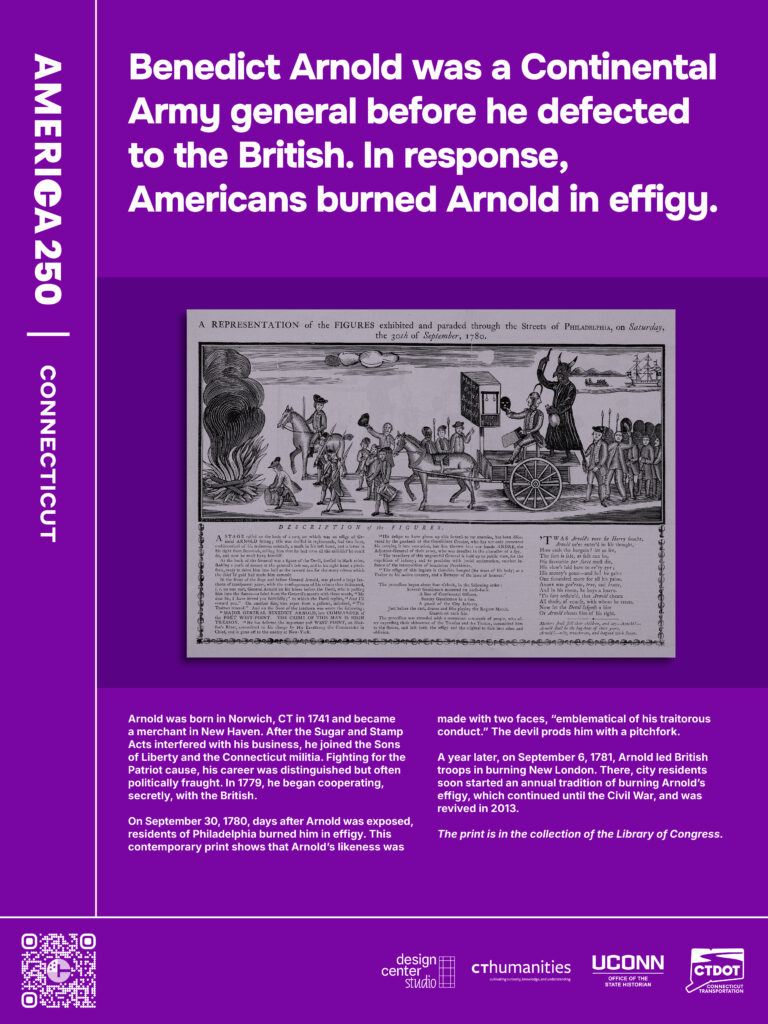
The print of Benedict Arnold’s effigy is in the Library of Congress in Washington, D.C.
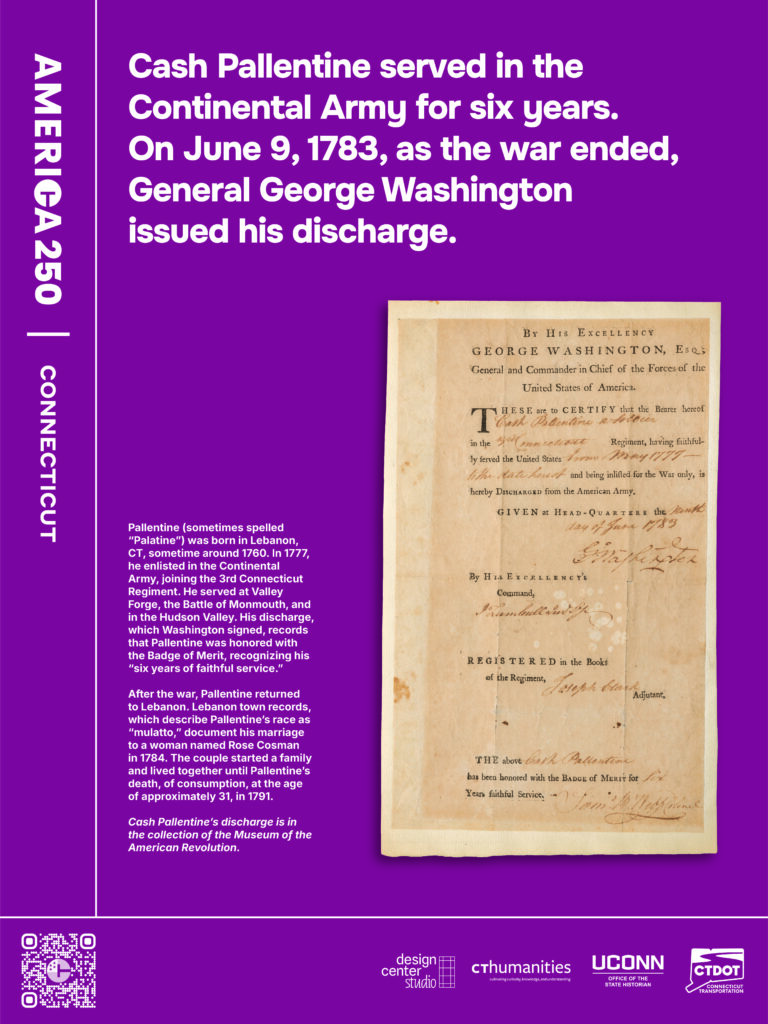
Cash Pallentine’s discharge is in the Museum of the American Revolution in Philadelphia, PA.